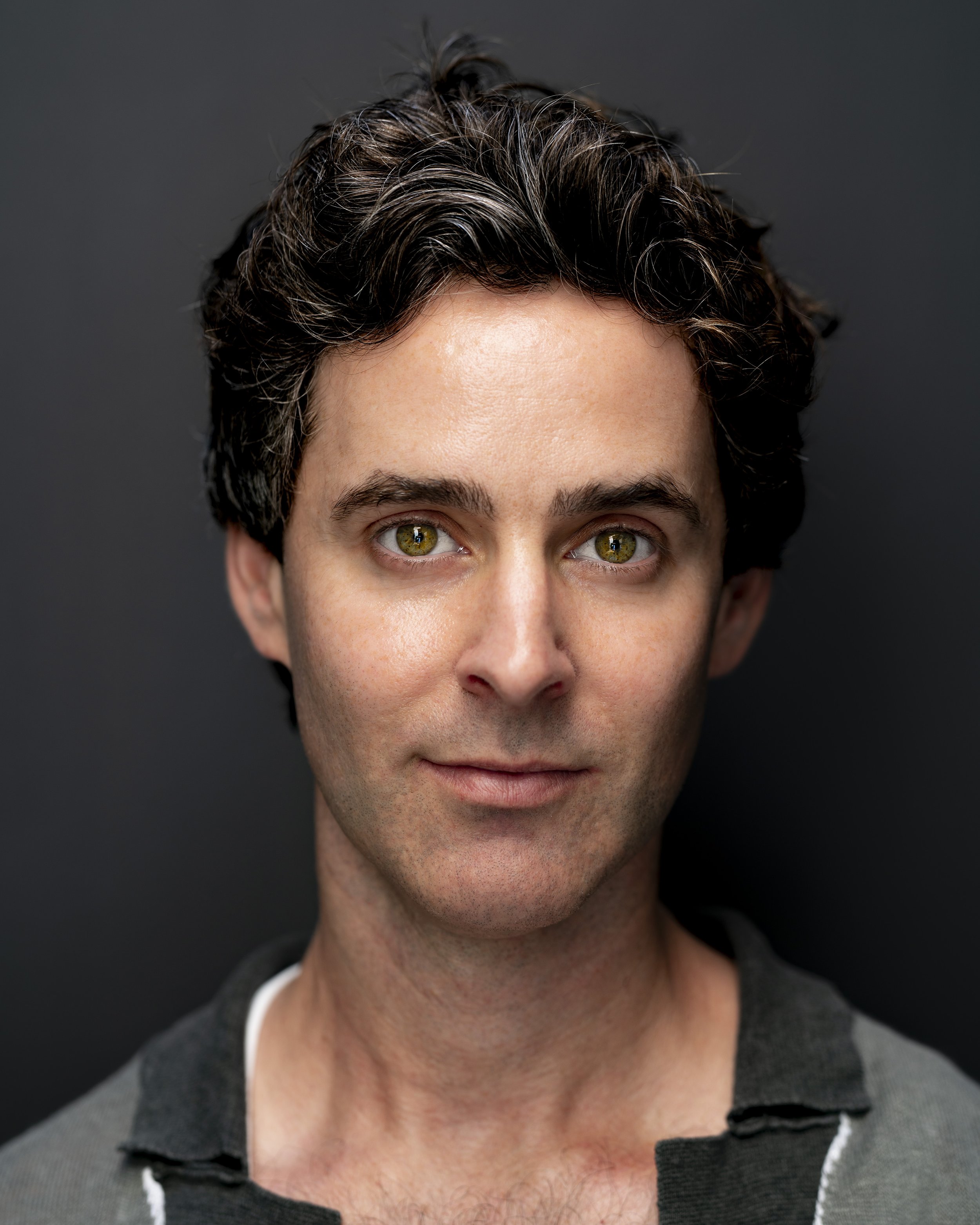
Brett Nicholas Brown
Opera Director & Librettist
Brett Nicholas Brown is an opera director and librettist whose work engages with the rediscovery of historical repertoire and the development of new opera.
Before focusing on directing, he trained as an actor at the Royal Academy of Dramatic Art and worked as an actor and classical singer. He performed companies including the Royal Shakespeare Company, and in baroque and contemporary repertoire, including music by Nico Muhly. He also created and performed Henry V: Man and Monarch, which toured internationally across Europe, Hong Kong, and Australia.
This extensive background in singing, classical text, movement, and stagecraft allows him to work with singers beyond purely musical interpretation. His rehearsal process integrates dramatic and musical thinking, focusing on the development of character, physical language, and the relationship between text and music.
He is drawn to operas without an established performance tradition, where staging becomes an act of construction rather than interpretation. His work is shaped by musicological research, dramaturgy, and a strong visual language, reimagining operatic works for contemporary audiences and allowing unfamiliar material to emerge with clarity and immediacy.
He has directed operas for the Valletta Baroque Festival and the Valletta Early Opera Festival, including the first modern revival of Girolamo Abos’ Pelopida (1747). These projects were developed through sustained collaboration with fashion designer Luke Azzopardi, architect Anthony Bonnici, and choreographer Simon Riccardi-Zani, forming a visual and physical world that evolved in dialogue with musical and dramatic structures.
Alongside his directing practice, he writes libretti for new opera in collaboration with composer David Coleman, including a full-scale work currently in advanced stages of composition. This engagement with new writing extends into a broader interest in literary adaptation for the stage, including Povestea Catalinei (Catalina’s Story), which he wrote and directed for the National Theatre of Romania, based on Boccaccio’s Decameron.
His work is grounded in the belief that opera’s future lies not only in preserving its heritage, but in expanding the canon — through the rediscovery of neglected works and the creation of new operas.