Brett Nicholas Brown is an opera director and librettist whose work is shaped by the reinterpretation of historical repertoire and the development of new opera. His practice brings together musicological research, innovative dramaturgy, and a distinctive visual aesthetic to reimagine operatic works for contemporary audiences.

A theatrical stage with nine performers, with one in the center wearing a gold and green costume with a feathered headdress, surrounded by other performers in formal and costume attire, in front of a minimalist white set with chairs and a chandelier overhead.

Artistic Vision

The operatic canon, as it is currently performed, represents only a fraction of the works created within it. My work engages with the rediscovery of historical repertoire and the development of new opera, shaped by the belief that rediscovery and creation are central to the continued vitality of opera.

My practice is shaped by an interest in how operatic works can be reinterpreted through a contemporary dramaturgical lens. I am particularly drawn to repertoire that invites re-examination: whether through the revival of neglected works, the development of new opera, or the adaptation of historical sources for contemporary performance.

Much of my recent work has centred on 18th-century opera, a repertoire that has often fallen out of circulation not through lack of artistic value, but through shifting historical and institutional priorities. These works offer the opportunity to present material that is both unfamiliar and deeply rooted in tradition.

In parallel, I am actively involved in the development of new opera. In collaboration with composer David Coleman, I am writing the libretto for a full-scale opera in advanced stages of composition, building on earlier collaborative work including Aer et Aqua.

My work often begins with historical material, musical or literary, which is then reimagined through contemporary dramaturgy and staging. This process is developed through sustained collaboration with designers and performers, allowing visual, spatial, and physical languages to evolve alongside the musical and dramatic structure. Whether reviving 18th-century opera seria, developing new libretti, or adapting literary sources such as Boccaccio’s Decameron and Shakespearean text, I am interested in how narrative can be reshaped for modern performance.

My approach is also grounded in my earlier work as a performer, encompassing acting with the Royal Shakespeare Company and work as a classical singer in both baroque and contemporary repertoire, including music by Nico Muhly. This experience continues to inform my understanding of rehearsal processes, vocal practice, and the relationship between performer, text, and the musical structure of a work in performance.

As an artistic leader, I am interested in programming that places rediscovery and new creation in dialogue: pairing lesser-known works with established repertoire, and developing seasons that are thematically coherent, historically informed, and responsive to contemporary audiences.

The future of opera lies not only in how we preserve its heritage, but in how we expand it.

Recent Work

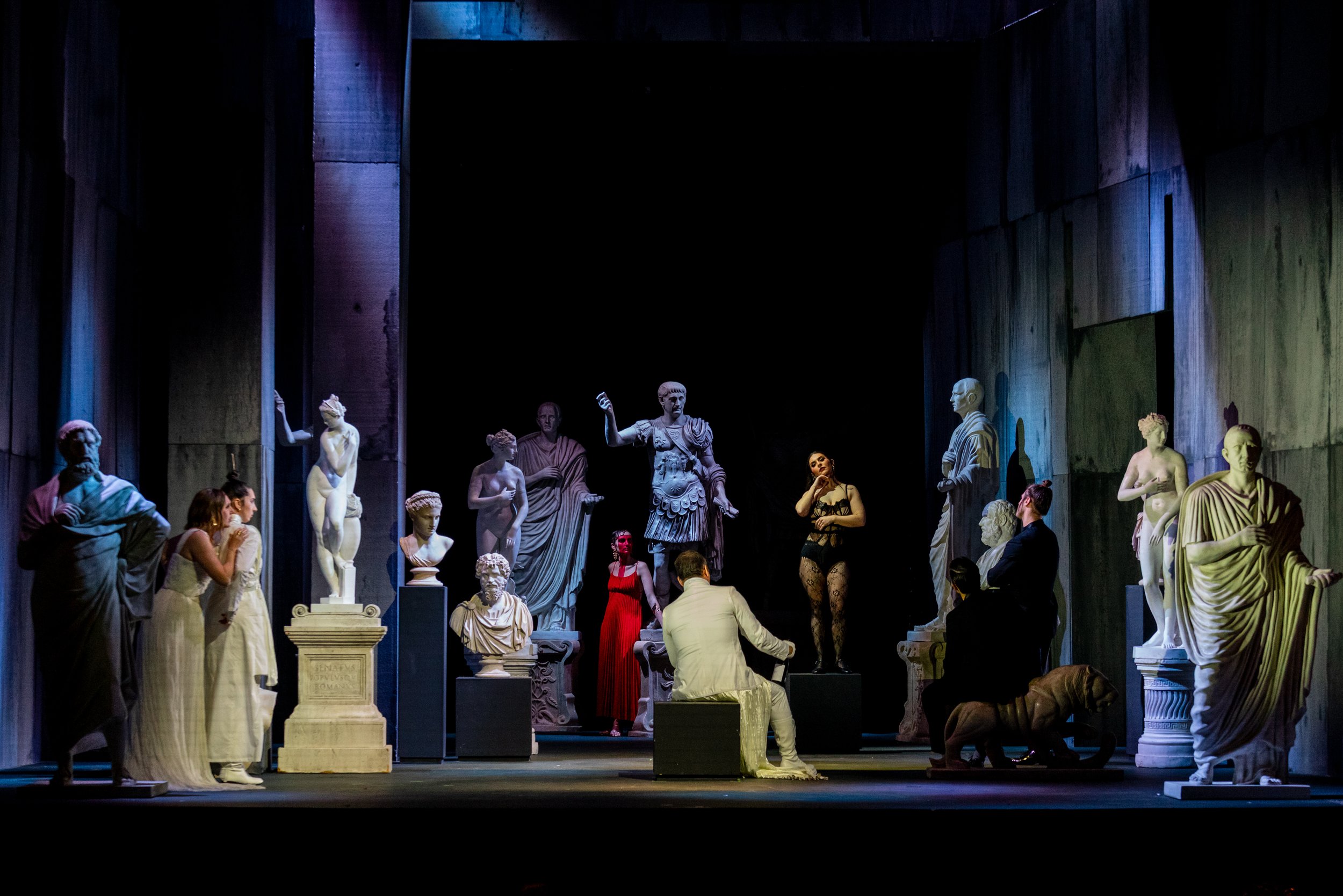
A theatrical stage set resembling ancient Greek or Roman statues, with actors and actresses performing amid classical sculptures and busts, some seated and others standing, under dramatic lighting.
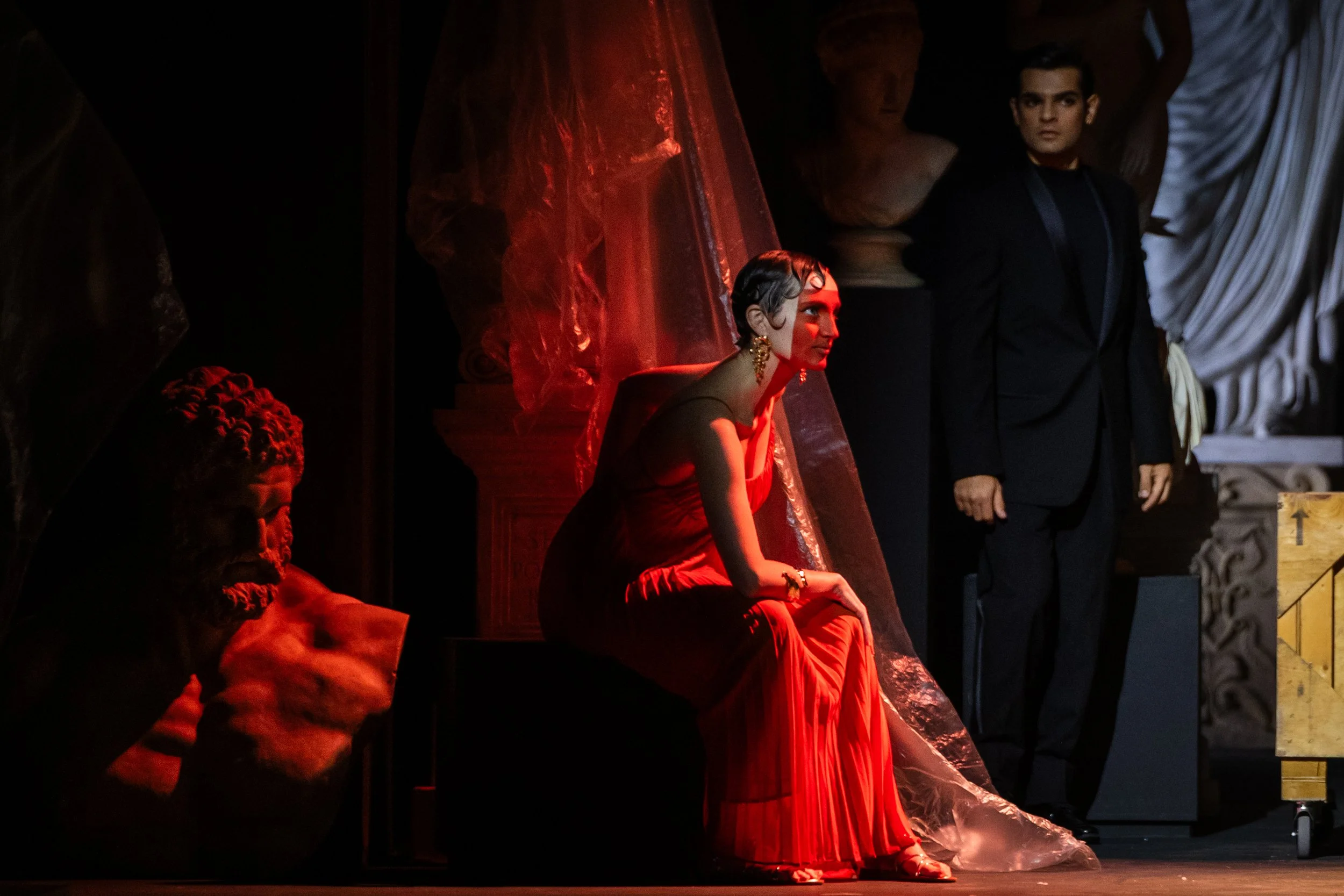
Pelopida production photograph: Woman in red dress sitting on stage, surrounded by classical sculptures and protective sheeting, with a man in black suit standing nearby.

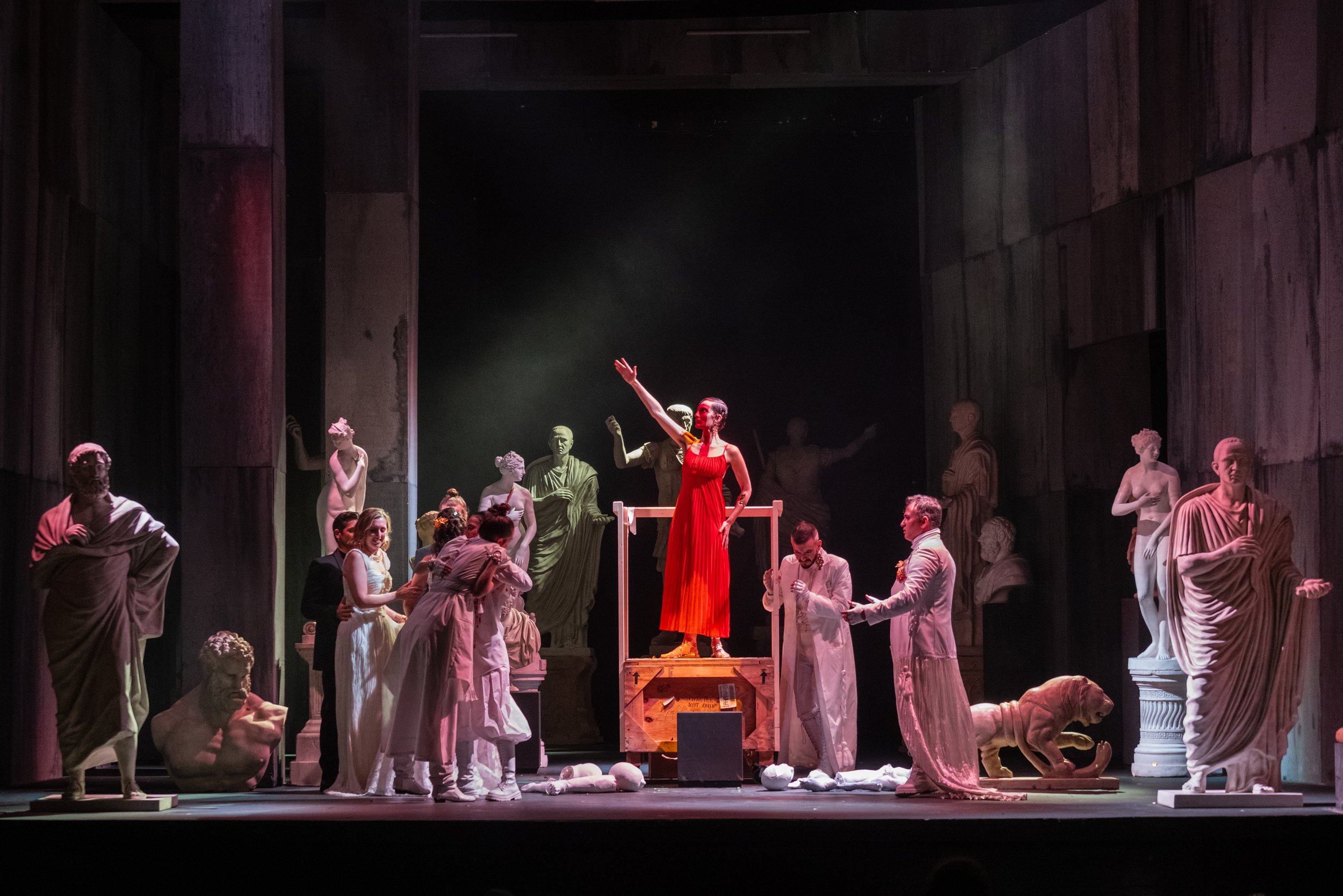
Pelopida

The first modern revival of Girolamo Abos’ 1747 opera, reconstructed from manuscript sources.


Ancient Thebes was reimagined as a contemporary sculpture museum, allowing the opera’s political and emotional conflicts to unfold in a space shaped by memory and curated history. Developed in collaboration with an international creative team, the project reflects a broader commitment to the reintroduction of neglected opera seria repertoire to the modern stage.
Girolamo Abos (1747)
Teatru Manoel | Valletta Baroque Festival
Conductor Giulio Prandi with the Ariana Art Ensemble

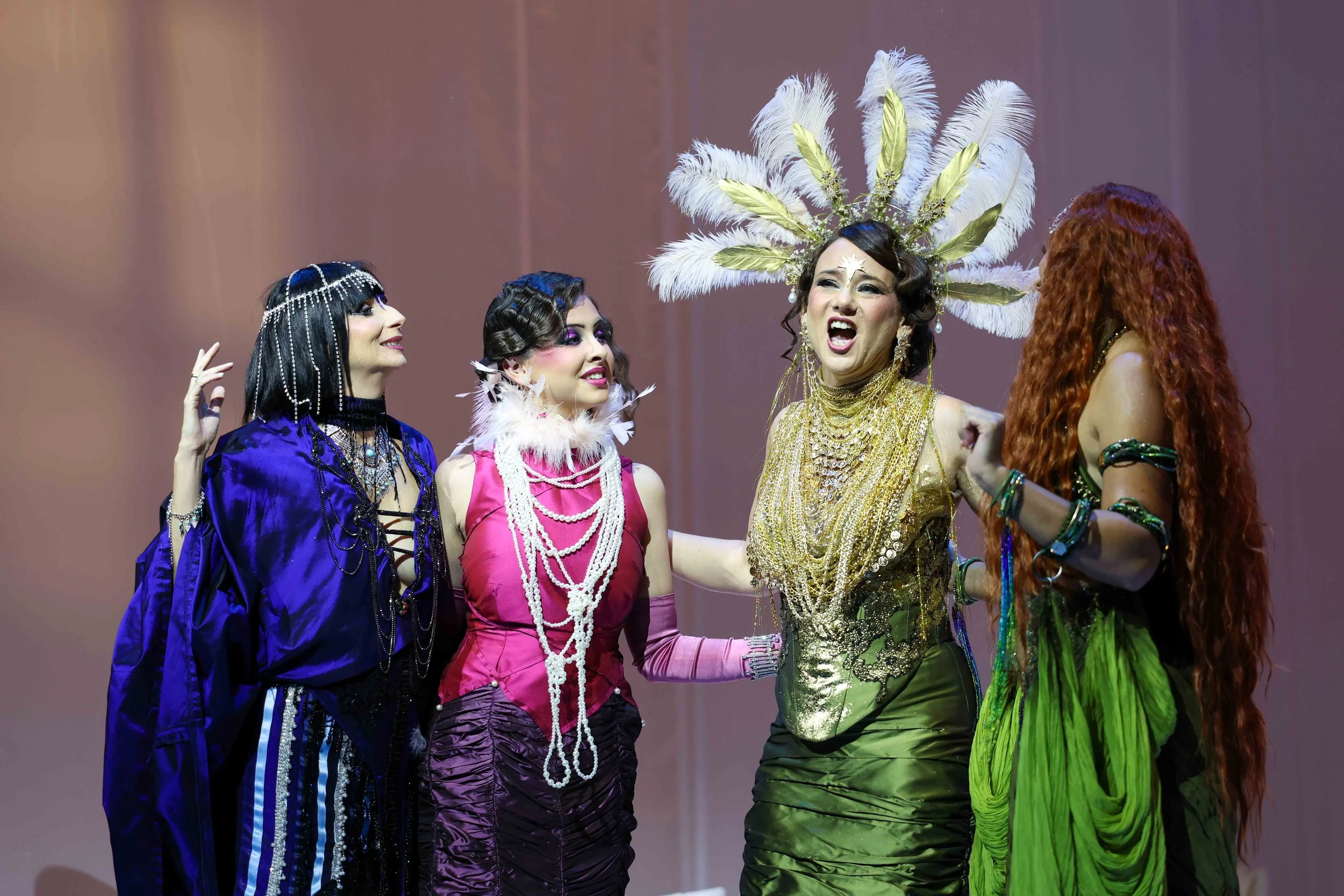
Four women dressed in colorful, elaborate costumes engaged in a theatrical performance. One woman wears a gold dress with an ornate feathered headdress, another in a pink and purple outfit with feathers and pearl necklaces, a third in a shiny purplish dress with layered jewelry, and the last in a green skirt with long, curly red hair.
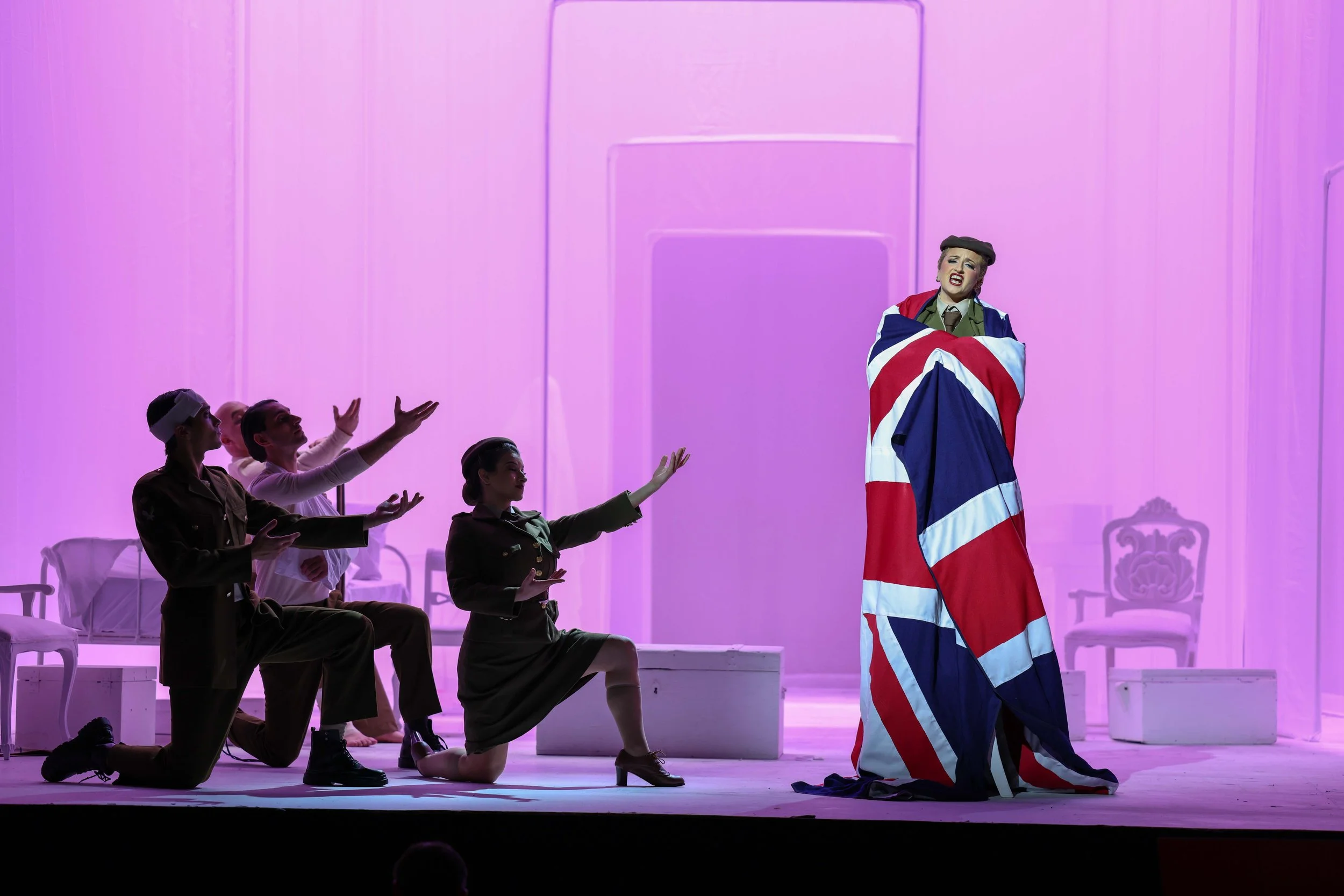
Production photograph from Il Parnaso Confuso with five performers on stage. One performer stands, wrapped in a large Union Jack flag. The others kneel or sit, reaching towards the standing performer, against a pink background with chairs on stage.

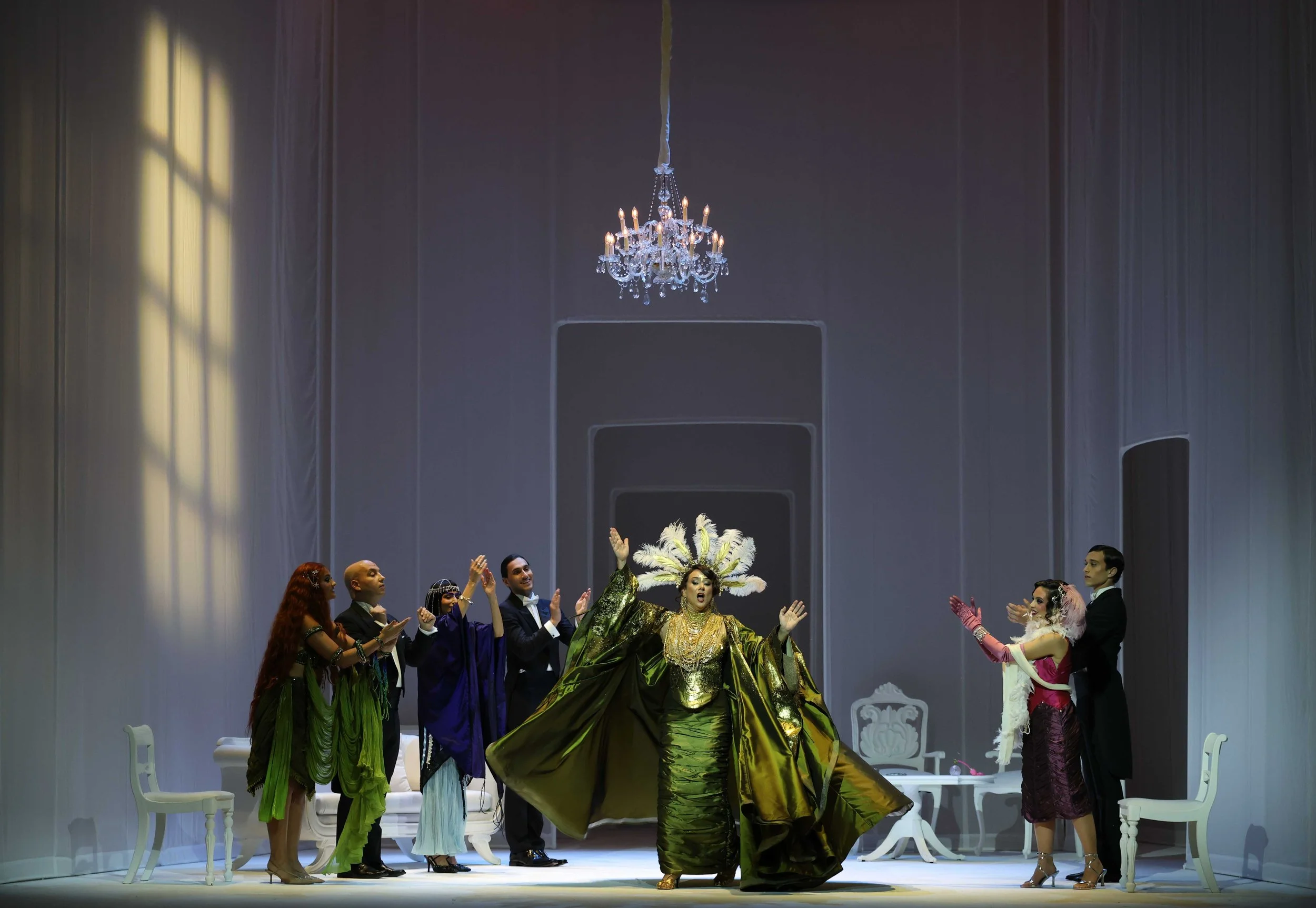
Il Parnaso Confuso & La Corona

A new staging of Gluck’s serenatas, reimagining their mythological settings within a unified twentieth-century British context.


The action was transposed from ancient Greece to a single manor house, with Il Parnaso Confuso situated in the 1920s and La Corona in the 1940s. This framing allowed the two works to exist within a shared dramatic world, reflecting distinct historical moments.

The production established a cohesive visual and dramaturgical language, maintaining close engagement with the musical and dramatic structures of the works while recontextualising their narratives for contemporary audiences.

Christoph Willibald Gluck (1765)
Teatru Manoel | Valletta Early Opera Festival
Conductors Giulio Prandi & Giacomo Biagi with the Ariana Art Ensemble

A New Opera (in development)

Composer: David Coleman

A full-scale opera currently in advanced stages of development, created in close collaboration between composer and librettist.

The work explores a contemporary re-examination of the late 19th-century verismo tradition, engaging with its musical language and dramatic intensity while developing a new dramaturgical framework.

Aer et Aqua

Composer: David Coleman

An orchestral and choral composition exploring elemental forces, with a Latin text developed through an integrated process of text and music.

Povestea Catalinei (Catalina’s Story)

After Giovanni Boccaccio’s Decameron
National Theatre of Romania

A devised work written and directed for the National Theatre of Romania, based on a story from Giovanni Boccaccio’s Decameron and performed in Romanian.

Presented as an internationally live-streamed production, the project explored the adaptation of historical narrative within a contemporary digital performance context.

About

Brett Nicholas Brown is an opera director and librettist whose practice engages with the rediscovery of historical repertoire and the development of new opera. His work is shaped by an ongoing exploration of how operatic meaning is constructed through the relationship between musical structure, text, performance, and audience.

He has directed productions for both the Valletta Baroque Festival and the Valletta Early Opera Festival, including the first modern revival of Girolamo Abos’ Pelopida (1747). His practice brings together musicological research, innovative dramaturgy, and a distinctive visual aesthetic to reimagine operatic works for contemporary audiences. He maintains ongoing creative collaborations with fashion designer Luke Azzopardi, architect Anthony Bonnici, and choreographer Simon Riccardi-Zani, through which this visual and physical language is developed and realised in performance.

Alongside his directing practice, he writes libretti for new operatic projects in collaboration with composer David Coleman, including a full-scale opera currently in advanced stages of composition.

This engagement with new writing extends into a broader interest in literary adaptation. He wrote and directed Povestea Catalinei (Catalina’s Story) for the National Theatre of Romania, adapting a tale from Giovanni Boccaccio’s Decameron for an internationally live-streamed production.

Before focusing on directing, he worked as an actor and classical singer, encompassing performances with the Royal Shakespeare Company and work in baroque and contemporary repertoire, including music by Nico Muhly. He also created and performed Henry V: Man and Monarch, an internationally touring solo performance presented across Europe, Hong Kong, and Australia.

This experience continues to inform his collaborative approach to working with performers and shaping rehearsal processes, as well as his interest in the adaptation of historical material across different performance contexts.

His work is guided by a broader interest in how opera can expand its repertoire while remaining rooted in its history, connecting rediscovered works and new creation within a contemporary performance context.

He trained at the Royal Academy of Dramatic Art.

Headshot of Brett Nicholas Brown. He has dark curly hair and green eyes, and wears a green shirt with a dark collar, set against a dark background.
Logos for Valletta Early Opera Festival, Valletta Baroque Festival, Teatru Manoel (the National Theatre of Malta),  "Marin Sorescu" National Theatre of Craiova, and Festivals Malta.